
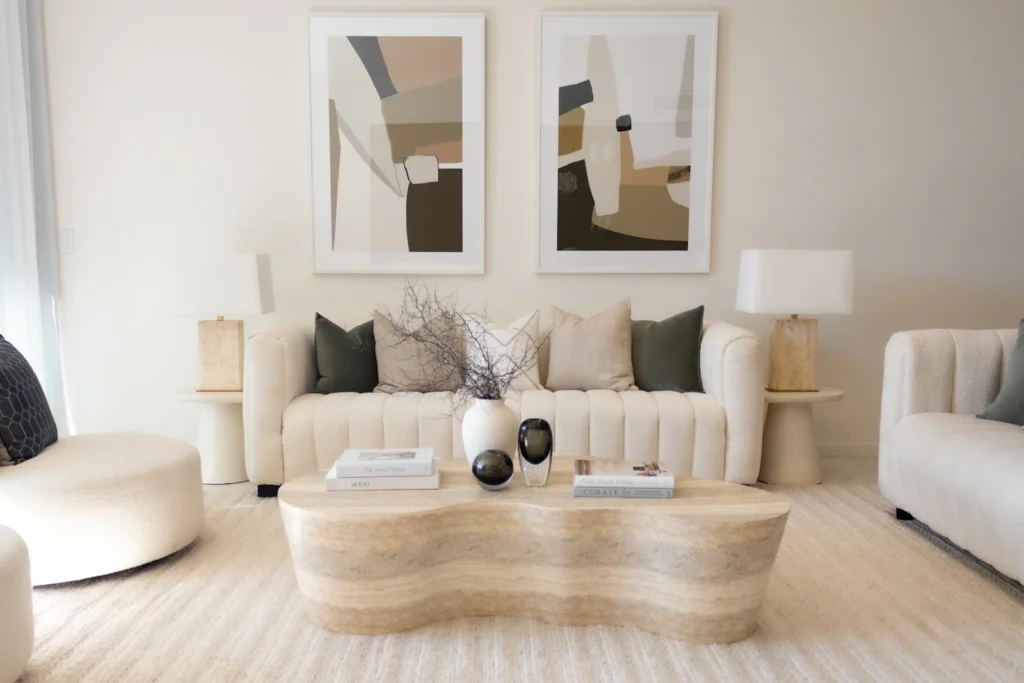
Here’s a small truth interior designers rarely say out loud: the coffee table is the easiest place in your entire home to look like you have your life together. It’s a few square feet. It costs almost nothing to style. And because it sits at the center of the room where every guest’s eye lands, a well-styled coffee table quietly upgrades everything around it — even a sofa you’ve had since your first apartment.
The flip side is also true. A coffee table buried under remotes, half-read mail, and a lonely coaster makes even a beautiful room feel unfinished. The good news? Styling one well isn’t about taste you’re born with. It’s a handful of learnable rules, and once you know them you’ll see them everywhere — in every hotel lobby, every design magazine spread, every enviable living room on Pinterest.
Start With a Blank Slate (Seriously, Clear Everything)
Before you style, strip the table completely. Remotes, chargers, the mug from this morning — all of it goes. This does two things. It shows you the table’s actual size and shape, which determines your layout. And it forces every object to earn its way back. The biggest styling mistake isn’t choosing the wrong vase; it’s letting clutter share space with decor. The clutter always wins.
While the table is bare, give a thought to scale. A good coffee table is roughly two-thirds the length of your sofa and within a couple of inches of the seat height. If your table is dramatically smaller, style lighter — one vignette, not three. Decor can’t fix proportion, but it can flatter it.
The Rule of Three (and Why Odd Numbers Always Win)
Designers group objects in odd numbers — threes, mostly — because the eye reads odd groupings as natural and even ones as staged. A stack of books, a candle, and a small bowl feels collected. Two identical candlesticks in the middle of a table feels like a furniture showroom.
Within each grouping, vary three things:
- Height: something tall (a vase with stems), something medium (a stack of books), something low (a small dish or object).
- Texture: mix smooth ceramic with rough wood, glass with woven fibers, matte with shine. Texture is what makes neutral palettes interesting.
- Shape: if your table is rectangular, add something round — a bowl, a circular tray, a curvy vase. Contrast in silhouette keeps the arrangement from feeling boxy.

The Four Building Blocks of Every Great Coffee Table
1. Books: your foundation layer
Coffee table books exist for a reason — they add instant height, color, and personality. Stack two to four horizontally, largest on the bottom, spines facing the main seating so they’re readable. Choose titles that actually say something about you: photography, travel, fashion, food, film. A stack of books you’d genuinely flip through beats a decorator-approved stack you’ve never opened.
Pro move: use the book stack as a pedestal. A small object — a ceramic figure, a candle, a tiny bowl — perched on top of the stack instantly looks intentional.
2. A tray: the secret to looking organized
A tray is the single most useful object in coffee table styling. It corrals small items — matches, coasters, even the remote — into one deliberate zone, and it gives you a portable vignette you can lift off the table when you actually need the surface for pizza night. Woven trays warm up modern rooms; lacquered or marble trays sharpen up casual ones. On round tables, a round or organically shaped tray almost always beats a rectangular one.
3. Something alive (or convincingly alive)
Every well-styled table has an organic element. Fresh flowers are the gold standard — even grocery store eucalyptus or a few stems in a bud vase changes the whole table. If you can’t keep flowers alive, a potted plant, a bowl of lemons, or good-quality dried stems (pampas, bunny tails, preserved eucalyptus) do the same job. What you’re adding is irregularity: nature’s shapes break up all the straight lines furniture creates.
4. A conversation piece
The last layer is the one that makes a table yours: a sculptural object, a vintage lighter, a shell from a trip, a small piece of art, a beautiful match cloche. One oddball object with a story beats five generic ornaments from the seasonal aisle. This is the piece guests pick up and ask about — which is the whole point of a coffee table, really.
Styling by Table Shape
Rectangular tables are the easiest: think in thirds. A stack of books on one third, a tray in the middle, florals on the last third — or collapse it to two zones and leave the rest breathing. Square tables like a grid: four quadrants with one element each, or one strong central vignette on a tray. Round tables want a single centered cluster — tallest element in the middle, shorter pieces radiating out. Oval tables follow rectangular rules but favor curved objects. And ottoman tables need a hard tray as a base before anything else goes on; things wobble on upholstery.
Leave Room for Actual Life
Here’s where a lot of styling advice goes wrong: a coffee table is furniture, not a museum plinth. Designers call it negative space; the rest of us call it somewhere to put your drink. Aim to style no more than two-thirds of the surface and leave the rest empty. If guests have to relocate a vignette to set down a glass, the table is overstyled — and it will slowly, inevitably, stop being used.
This is also the argument for skipping fragile heirlooms and anything top-heavy if you have kids, pets, or enthusiastic gesturing friends. Style for the life you actually live.
Seasonal Switches That Take Five Minutes
You don’t need to re-style for every season — just swap the organic element and one accent. Tulips and a light linen-bound book in spring. Shells or citrus in a bowl for summer. Dried stems, a rust or amber candle, and a darker book jacket in autumn. Pine sprigs, a metallic object, and a taper candle for winter. Same bones, new mood, five minutes flat.
Common Coffee Table Styling Mistakes
- Everything the same height. Flat arrangements read as clutter even when they’re tidy. Force at least three levels.
- Too many small objects. Ten tiny things look like a yard sale; three medium things look like a decision.
- Ignoring scale. A single bud vase on a huge sectional table disappears. Big table, bigger gestures.
- Leaving remotes loose. They’re the number one table-ruiner. Give them a lidded box or a tray and never think about them again.
- Buying a matching \”decor set.\” Perfectly coordinated objects from one store shelf always look like it. Mix sources, eras, and price points.
People Also Ask
What should I put on my coffee table?
The classic formula is four elements: a stack of two to four coffee table books, a tray to corral small items, something organic like flowers or a plant, and one personal object with a story. Vary the heights, group in odd numbers, and leave at least a third of the surface empty for everyday use.
How do you style a coffee table on a budget?
Shop your own house first — books you already own, a bowl from the kitchen, a candle from the bedroom. Add grocery store flowers in a jar or thrifted vase. Secondhand shops are full of trays, ceramics, and hardcover books for a few dollars. The rules of height, texture, and odd numbers cost nothing; they do all the heavy lifting.
How many items should be on a coffee table?
Three to five distinct elements is the sweet spot for most tables — for example, a book stack, a tray vignette, and a vase counts as three. Small tables might take just one grouping; oversized tables can handle three zones. When in doubt, remove one thing. Arrangements almost always improve by subtraction.
Should a coffee table match the TV stand or side tables?
No — matched furniture sets flatten a room. Aim for coordination instead: repeat one element (wood tone, metal finish, or general silhouette) so pieces feel related, then vary the rest. A walnut coffee table with a black TV console and a marble side table looks far more designed than a three-piece matching set.
What do you put on a coffee table when you have kids?
Go low, soft, and washable: a woven tray, board books or a kid-friendly photo book on the bottom of the stack, a sturdy wooden or ceramic bowl, and dried stems instead of a tippable vase of water. Save candles and glass for the mantel years. A styled table and a toddler can coexist — the trick is choosing objects that bounce.
The Bottom Line
Coffee table decor comes down to a repeatable formula: clear the surface, build in odd-numbered groups with varied heights and textures, anchor with books and a tray, add something alive and something personal, and leave breathing room for real life. Master those moves once and you can restyle in ten minutes, every season, forever — no design degree required.