
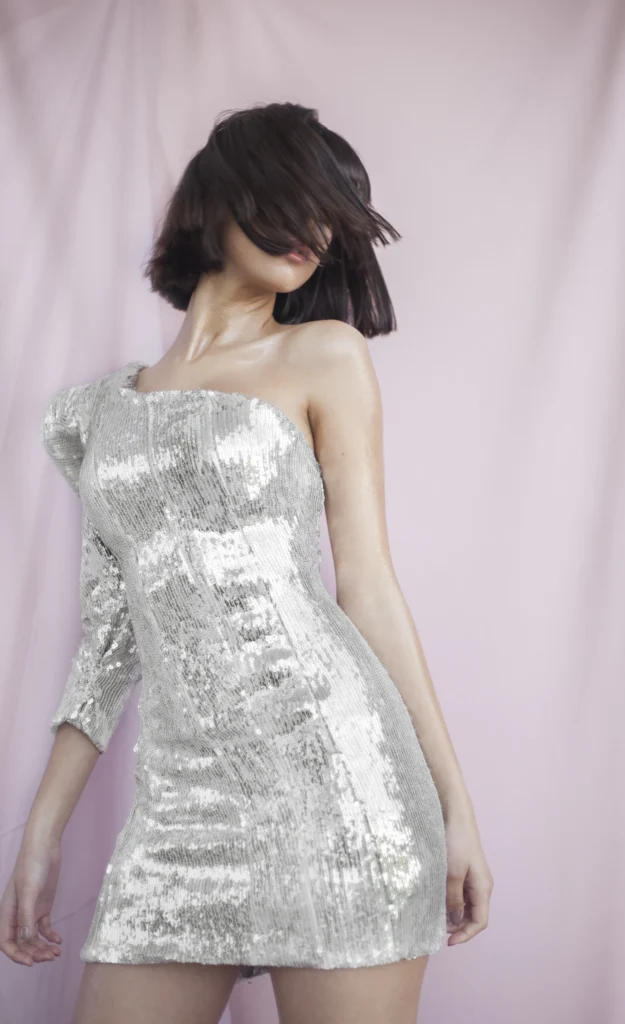
Naked dressing has been red carpet shorthand for confidence for three decades now, but Sydney Sweeney keeps finding a way to make the sheerest trend in fashion feel brand new: she covers it in sparkle. Where other stars lean on nude mesh and quiet minimalism, Sweeney’s take glitters — crystal-embellished netting, liquid sequins, beaded fringe that catches every camera flash. It is naked dressing turned all the way up, and honestly, it might be the most wearable version of the trend yet.
First, a Refresher: What Is Naked Dressing?
“Naked dressing” is the umbrella term for looks built on transparency and the illusion of bare skin — sheer fabrics, strategically placed embellishment, nude-toned linings that blur where dress ends and body begins. It is not actually about nudity; it is about engineering. The best naked dresses are some of the most technically complex garments on any carpet, involving corsetry, invisible mesh and hours of hand-beading.
Sydney’s Version: Sparkle as Coverage
What separates Sweeney’s approach from the standard-issue sheer slip is that the shine itself does the work. Across premieres, award-season parties and brand appearances, she has returned again and again to the same formula: a transparent base layer — tulle, mesh, fine netting — carrying a dense constellation of crystals, sequins or beadwork exactly where coverage matters. The effect reads glamorous before it reads daring. Your eye goes to the light, not the skin.
It is a very old-Hollywood trick wearing a very modern silhouette. Sweeney has been open about her love of vintage glamour — she has worn archival and vintage-inspired gowns on some of her biggest carpets — and the sparkly naked dress is essentially the bombshell gown’s newest descendant: hourglass shapes, corseted bodices and wattage that flatters rather than shocks.
The Lineage: A Very Brief History of the Sparkly Naked Dress
- 1930s–50s: Marlene Dietrich and costume designer Jean Louis pioneer the “illusion” gown — souffle mesh scattered with crystals.
- 1962: Marilyn Monroe’s “Happy Birthday, Mr. President” dress — 2,500 hand-sewn crystals on flesh-toned marquisette — becomes the genre’s founding document.
- 1970s–80s: Cher and Bob Mackie turn beaded transparency into a personal brand.
- 1993: Kate Moss’s sheer metallic slip makes naked dressing a fashion-week statement rather than a stage costume.
- 2014: Rihanna’s Swarovski-covered Adam Selman gown at the CFDA Awards resets the bar for the modern era.
- Now: a generation of stars — Sweeney chief among them — treats crystal mesh as a red carpet neutral.
Why the Sparkly Version Works So Well
Three reasons. First, embellishment adds visual weight, so a sheer dress with all-over crystal reads dressed-up rather than undressed — it photographs like jewelry. Second, shine is forgiving in a way plain mesh is not; light moving across beadwork softens and sculpts. Third, it solves naked dressing’s biggest practical problem: the difference between a look that is 90% confidence and one that is 90% anxiety is usually coverage you can trust, and densely beaded panels are exactly that.
How to Borrow the Trend (Without a Stylist)
- Start with one sheer zone — sleeves, a neckline panel or a hem — rather than a fully transparent dress.
- Choose dense embellishment over scattered sparkle if you want real coverage; sequin “placement” is doing structural work, not just decoration.
- Match the lining to your skin tone for the illusion effect, or contrast it (black under crystal) for a bolder, less bare look.
- Keep everything else quiet: sleek hair, minimal jewelry, simple sandals. The dress is the entire conversation.
People Also Ask
What is the naked dress trend?
The naked dress trend refers to gowns made from sheer or transparent fabrics — mesh, tulle, lace — often lined in a nude tone or covered with strategic embellishment so the wearer appears bare while remaining covered. It has been a red carpet staple since the 1990s and traces back to Hollywood “illusion” gowns of the 1930s.
Who made the naked dress famous?
Marilyn Monroe’s crystal-covered 1962 “Happy Birthday” gown is the most famous early example, Kate Moss’s 1993 sheer slip brought it to fashion, and Rihanna’s 2014 Swarovski CFDA dress defined the modern version that stars like Sydney Sweeney riff on today.
How do you wear sheer clothing tastefully?
Limit transparency to one area, use skin-tone or contrast linings, favor embellished or textured sheers over plain mesh, and balance a revealing element with covered ones — long sleeves with a sheer bodice, or a sheer skirt with an opaque top.