
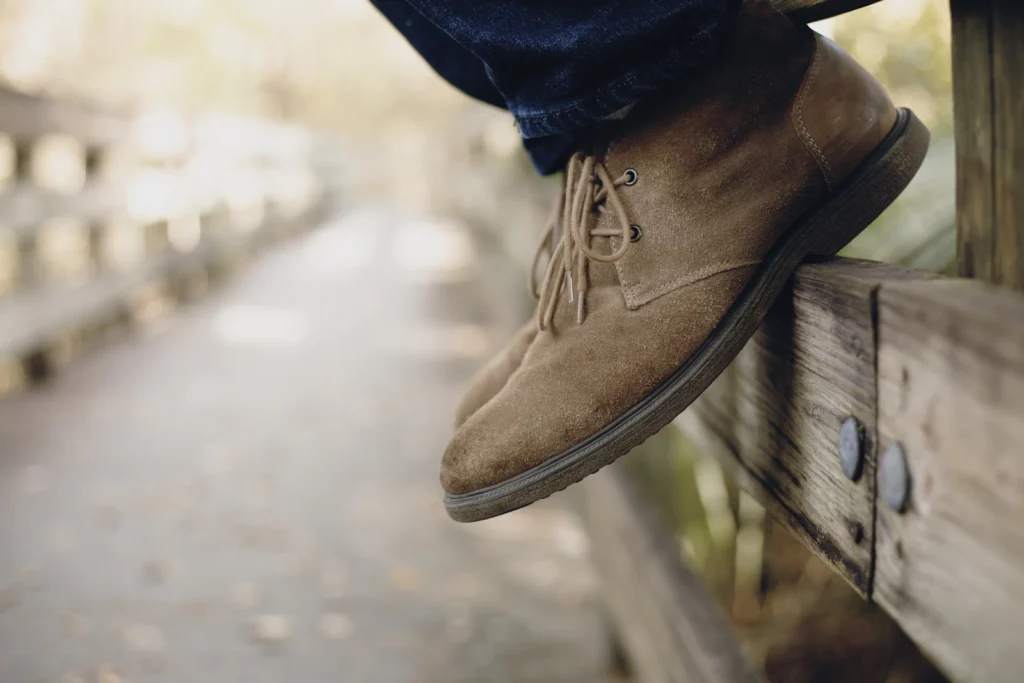
To clean suede shoes, you need three things: a suede brush, a suede eraser and — for stubborn stains — white vinegar. What you should never use is water and regular soap, which is exactly what ruins most pairs. Suede is leather with a brushed, velvety nap, and that nap is the whole game: clean it dry whenever possible, work in one direction, and save liquids for a last resort. Here is the full routine, stain by stain.
What You’ll Need
- A suede brush (or a clean, stiff-bristled toothbrush in a pinch)
- A suede eraser (a clean white pencil eraser also works)
- White vinegar or rubbing alcohol
- A clean cloth or two
- Cornstarch or talcum powder (for oil stains)
- Suede protector spray (for afterwards)
Step 1: Brush, Always Dry, Always One Direction
Make sure the shoes are completely dry — brushing damp suede grinds dirt in. Sweep the brush in the direction of the nap to lift surface dust, then use short back-and-forth strokes only on flattened, shiny patches to revive the texture. This two-minute habit after each wear prevents 80% of suede problems before they start.
Step 2: Erase Scuffs and Marks
For scuffs and dry stains, rub the suede eraser over the mark with moderate pressure, as if erasing pencil. Crumbs will form — brush them away and repeat. This handles most everyday marks: scuffed toes, dirt lines, pen grazes.
Step 3: Tackle Specific Stains
Water Spots
Counterintuitively, you fix water stains with more water: lightly dampen the entire panel with a barely-wet cloth so it dries evenly, blot with a dry cloth, stuff the shoes with paper to hold their shape, and let them dry away from heat. Brush the nap back up once dry.
Salt Stains
Winter’s white tide lines respond to white vinegar. Dab a small amount onto a cloth (never pour it on the shoe), work it gently over the stain, let it dry fully, then brush. Repeat rather than soak — two light passes beat one wet one.
Oil and Grease
Act fast: cover the fresh stain generously with cornstarch or talcum powder and leave it overnight to draw the oil out. Brush off in the morning and repeat if needed. Old, set oil stains are the one case where a professional cobbler is worth the money.
Mud
Resist wiping wet mud — you will push it into the nap. Let it dry completely, crack off the chunks, then brush and erase what remains.
Step 4: Protect Before You Wear Them Again
Once clean and dry, spray with a suede protector — an invisible water-and-stain repellent — holding the can about 15cm away in light, even coats. Reapply every few months, and always on brand-new shoes before their first wear. It is the single best money you can spend on suede.
What Not to Do
- No soap and water washing — it stiffens the leather and leaves tide marks.
- No radiators, hairdryers or direct sun for drying — heat cracks suede.
- No washing machine. Ever. Not even “on delicate.”
- Don’t scrub wet stains — blot, dry, then treat.
People Also Ask
Can you clean suede shoes with water?
Mostly no — spot-cleaning suede with water causes staining and stiffness. The exception is fixing existing water spots, where you lightly and evenly dampen the whole panel so it dries uniformly. For everything else, clean suede dry with a brush and eraser.
What household items clean suede shoes?
A clean pencil eraser stands in for a suede eraser, a soft toothbrush for a suede brush, white vinegar or rubbing alcohol lifts salt and set-in stains, and cornstarch draws out fresh oil.
How do professionals clean suede?
Cobblers use specialized degreasers, steam and re-napping tools, and can also re-dye faded suede. Professional cleaning typically makes sense for set-in oil stains, dye transfer or expensive pairs worth restoring.